VISIT: La Cripta de la Colònia Güell
Colònia Güell, a short 20 minute drive from Barcelona, was formerly an industrial colony that housed 700 families of textile workers. During Spain's industrial revolution, the colony was built as a socialist, patristic, "utopian" neighborhood intended to provide all residents with schools, recreational spaces, healthcare, and housing as long as residents worked in the textile factory and sent their children to work in the textile factory too when the time came.
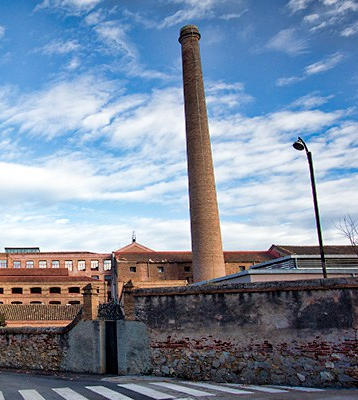
The colony’s factory has been converted into luxury lofts, but the factory’s historical chimney still stands. Image via PassaporteBCN
The town itself is a cute Spanish daydream. I went on a sunny day and loved how the light bounced off of white and pastel houses, each with potted plants in the front and a mountainous landscape in the back. The brickwork of the oldest buildings throughout the neighborhood is a sight in itself.
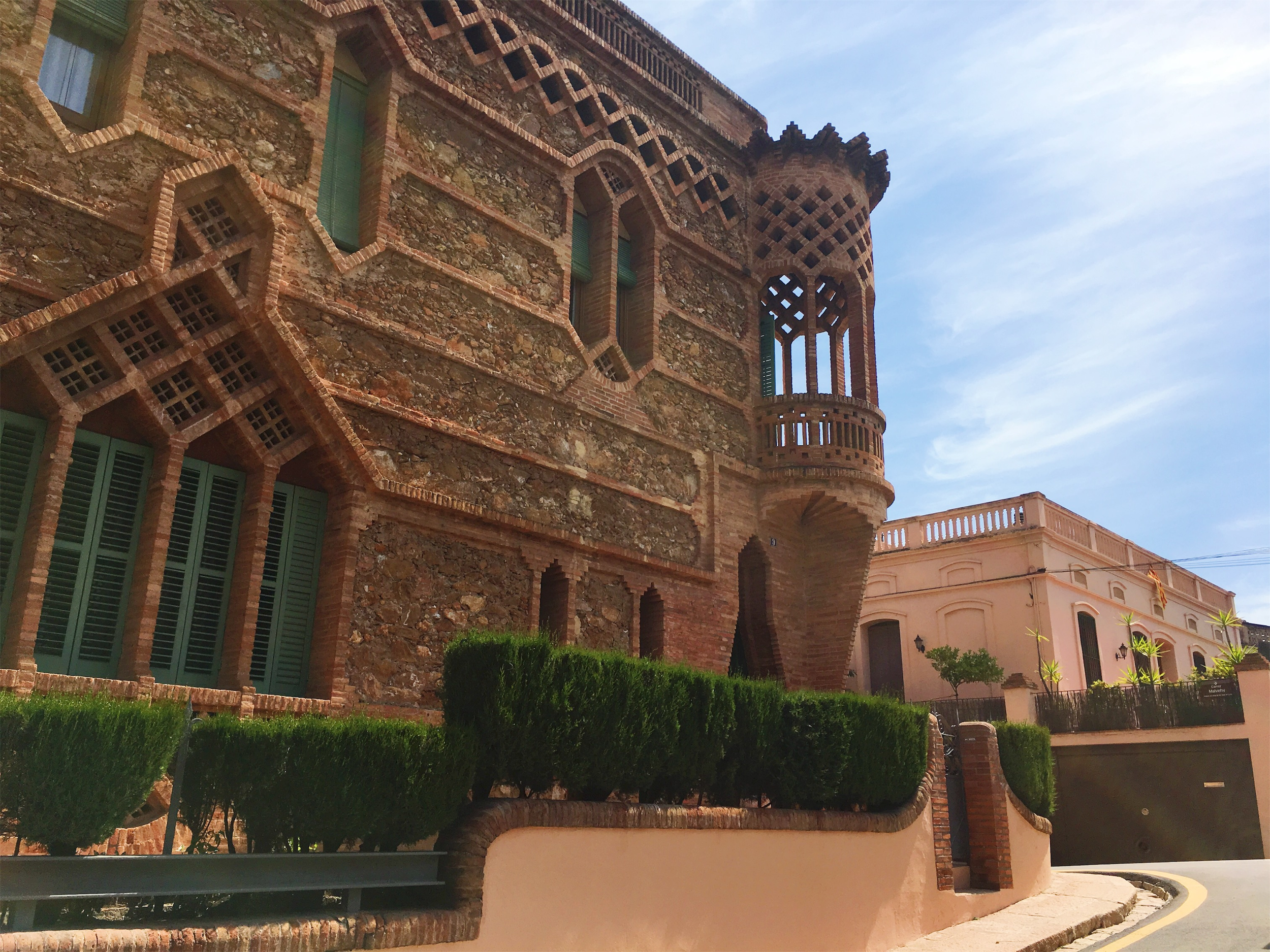
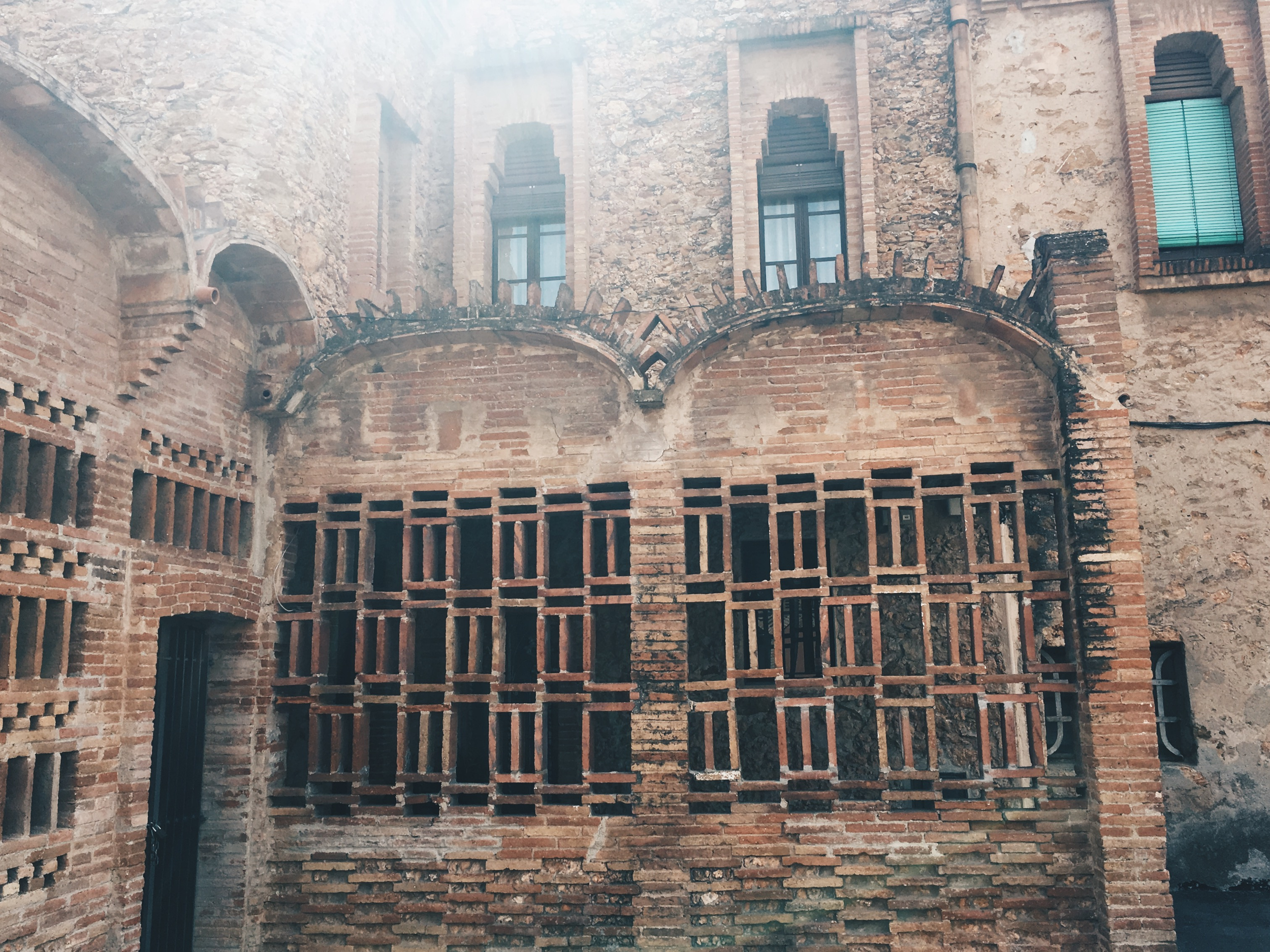
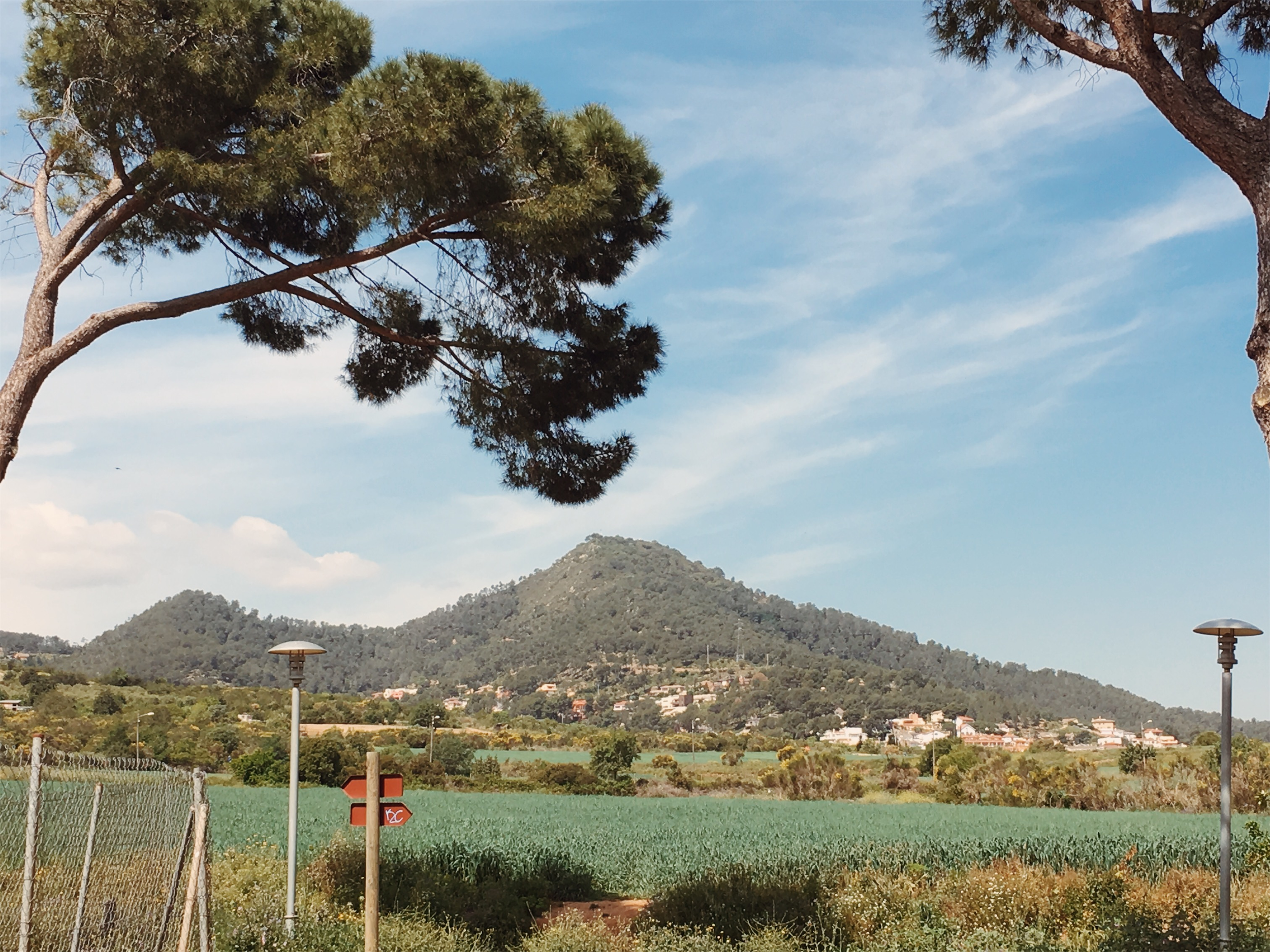
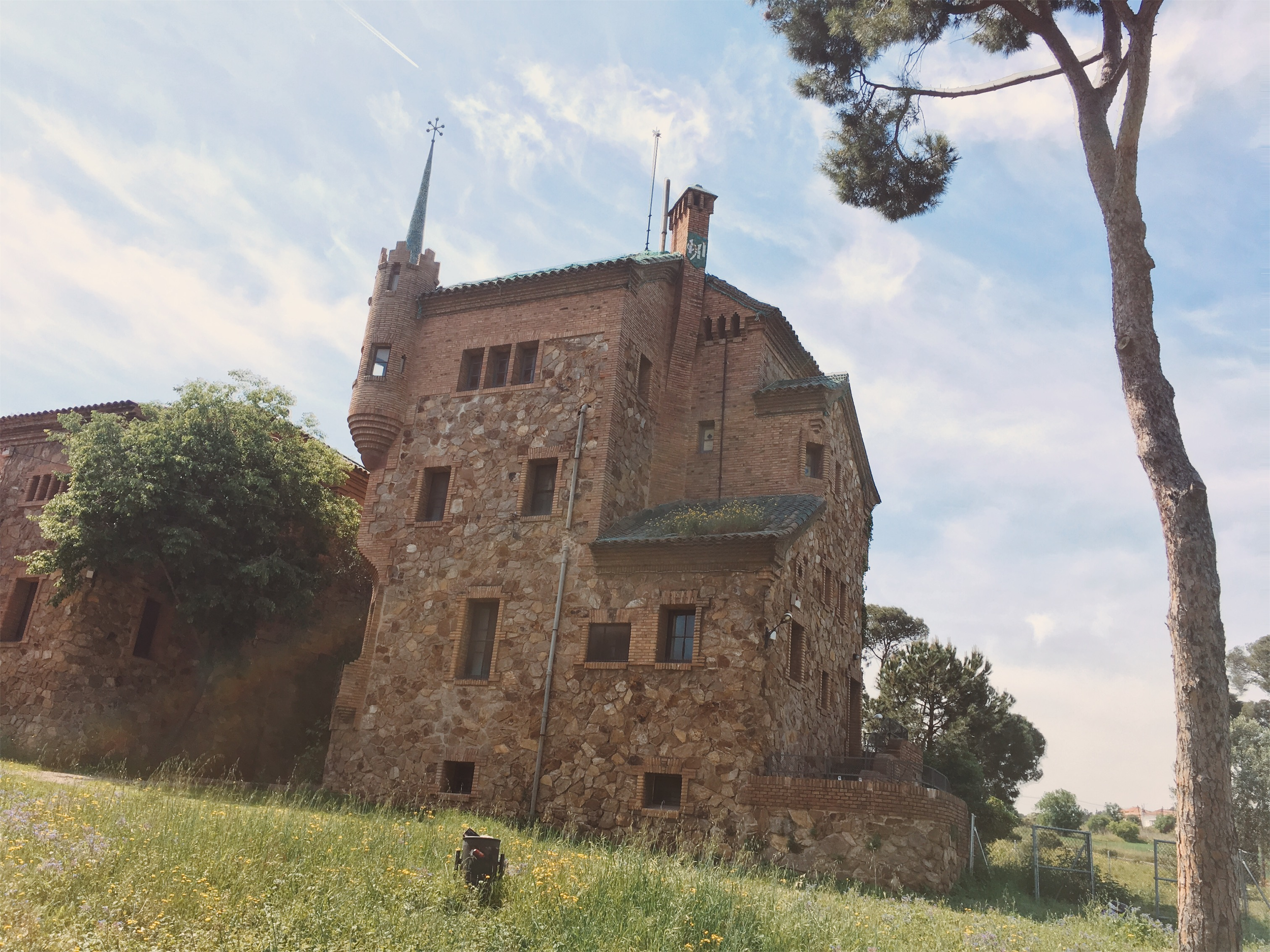
Though I immediately fell in love with the residential town, the colony's main attraction is its church, designed by the famous Antonin Gaudí.
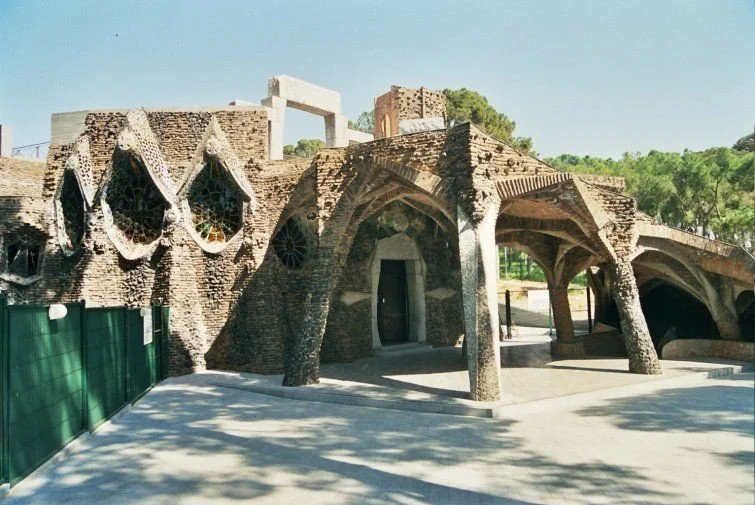
Image via Pinterest
Some call it Gaudí's best kept secret, and others say it was his trial run for his better known Sagrada Familia. Personally, I loved it for so many of its tiny details. Hearing Barcelona tourists rave about la Sagrada Familia has gotten really boring really fast, and I was starting to think Gaudí was overrated. But this church, where he wasn't limited to working off of another architect's foundation, really shows off Gaudí's resourcefulness and creative vision, and definitely redeems him in the eyes of any skeptics.
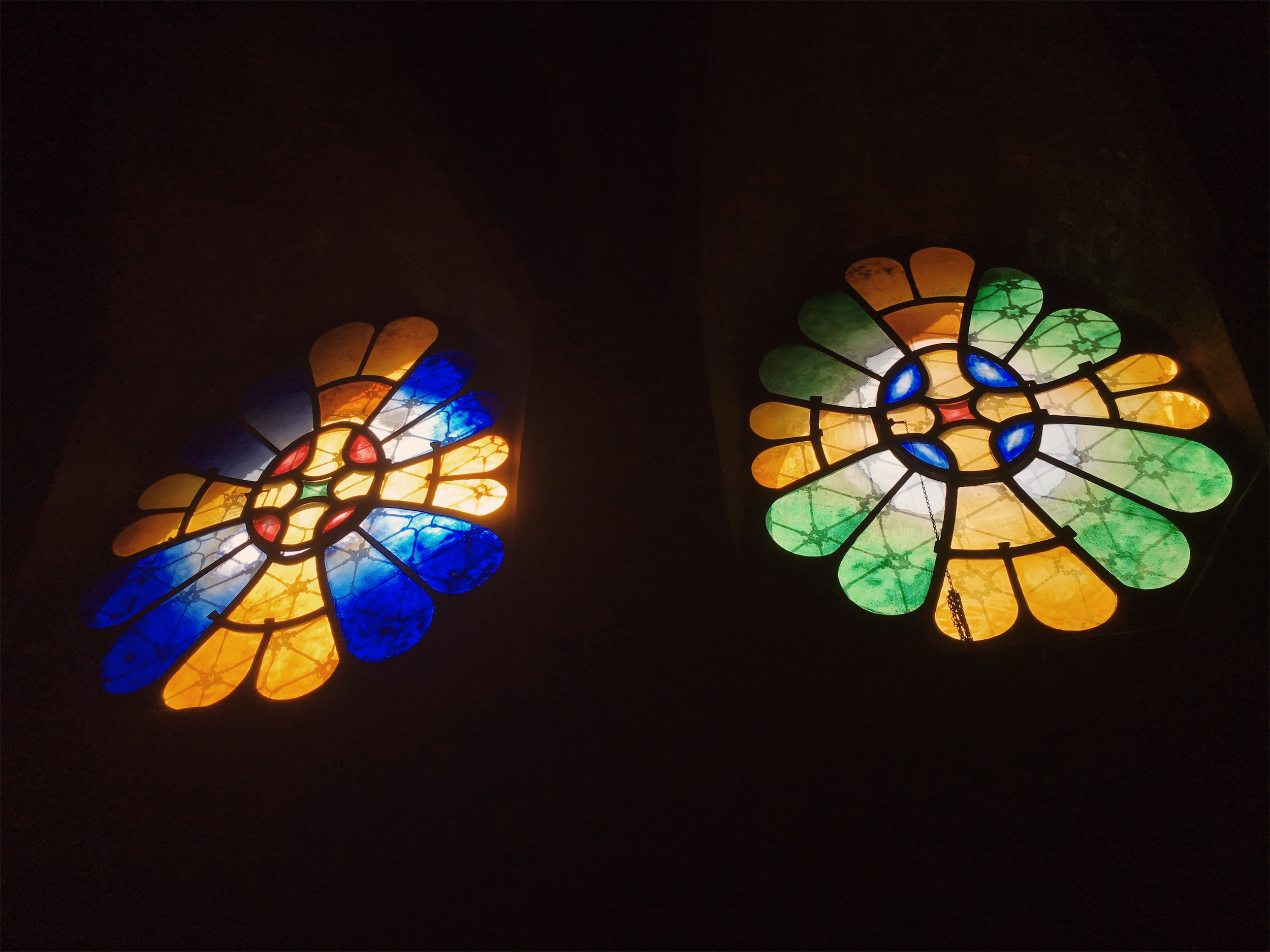
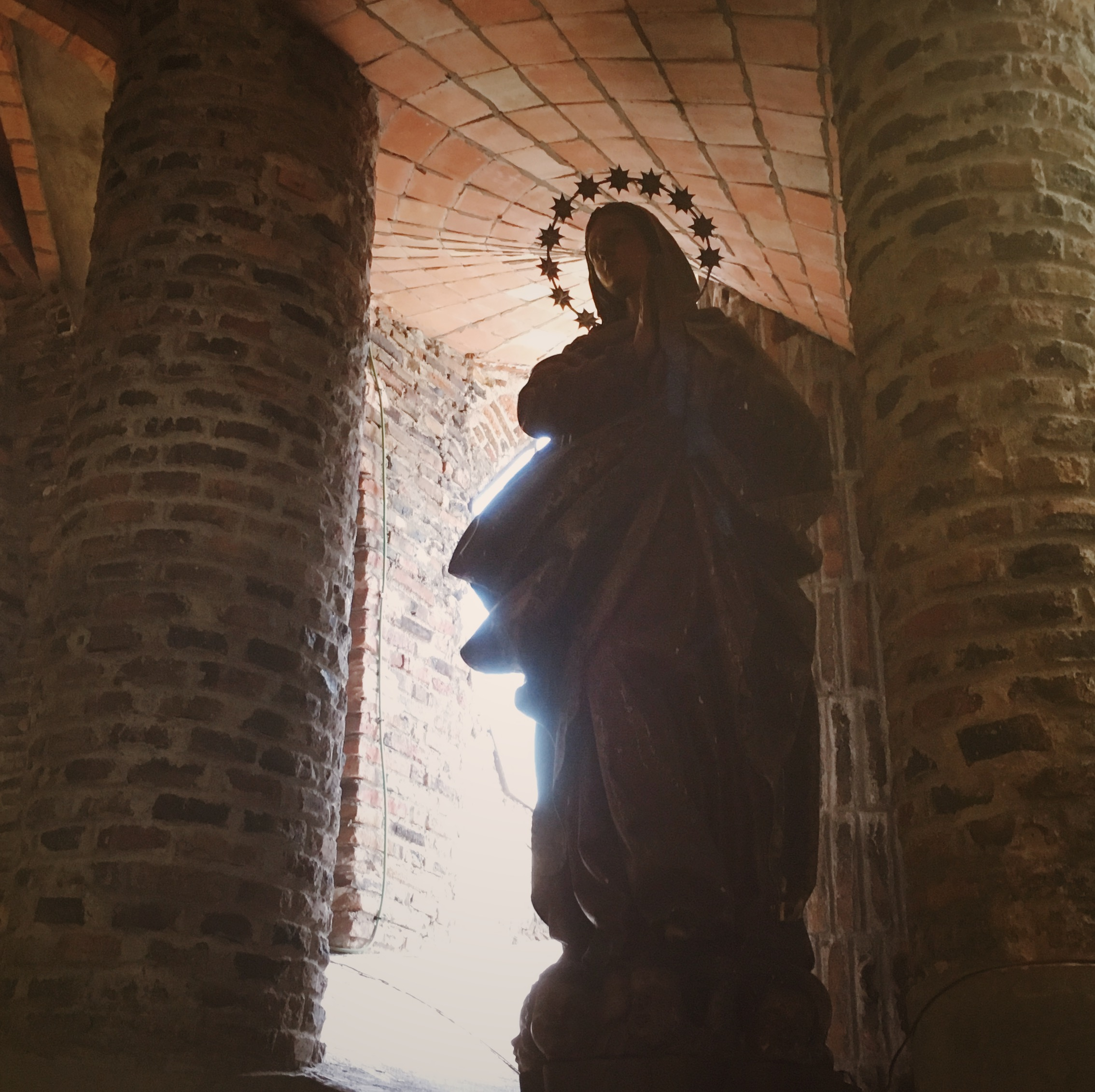
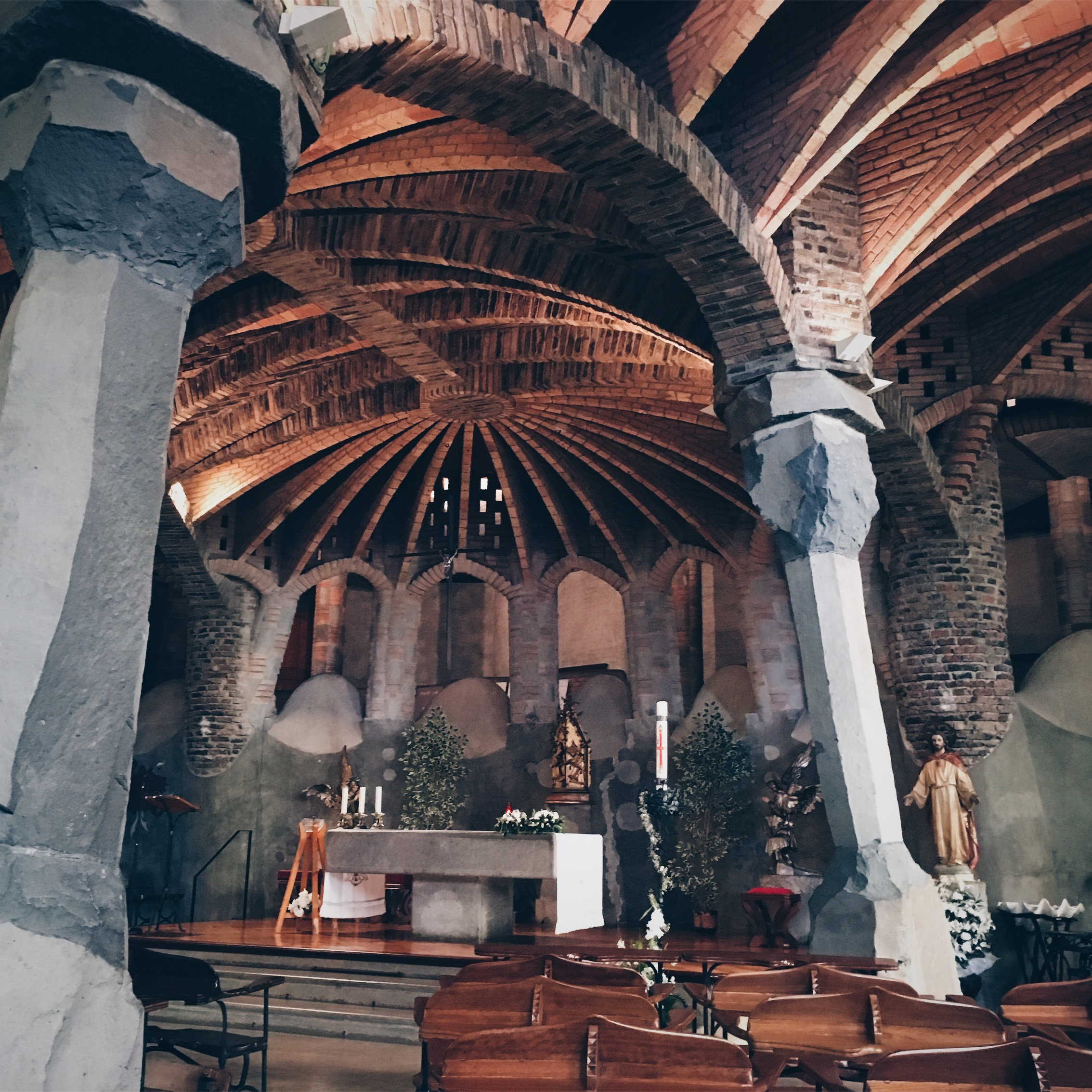
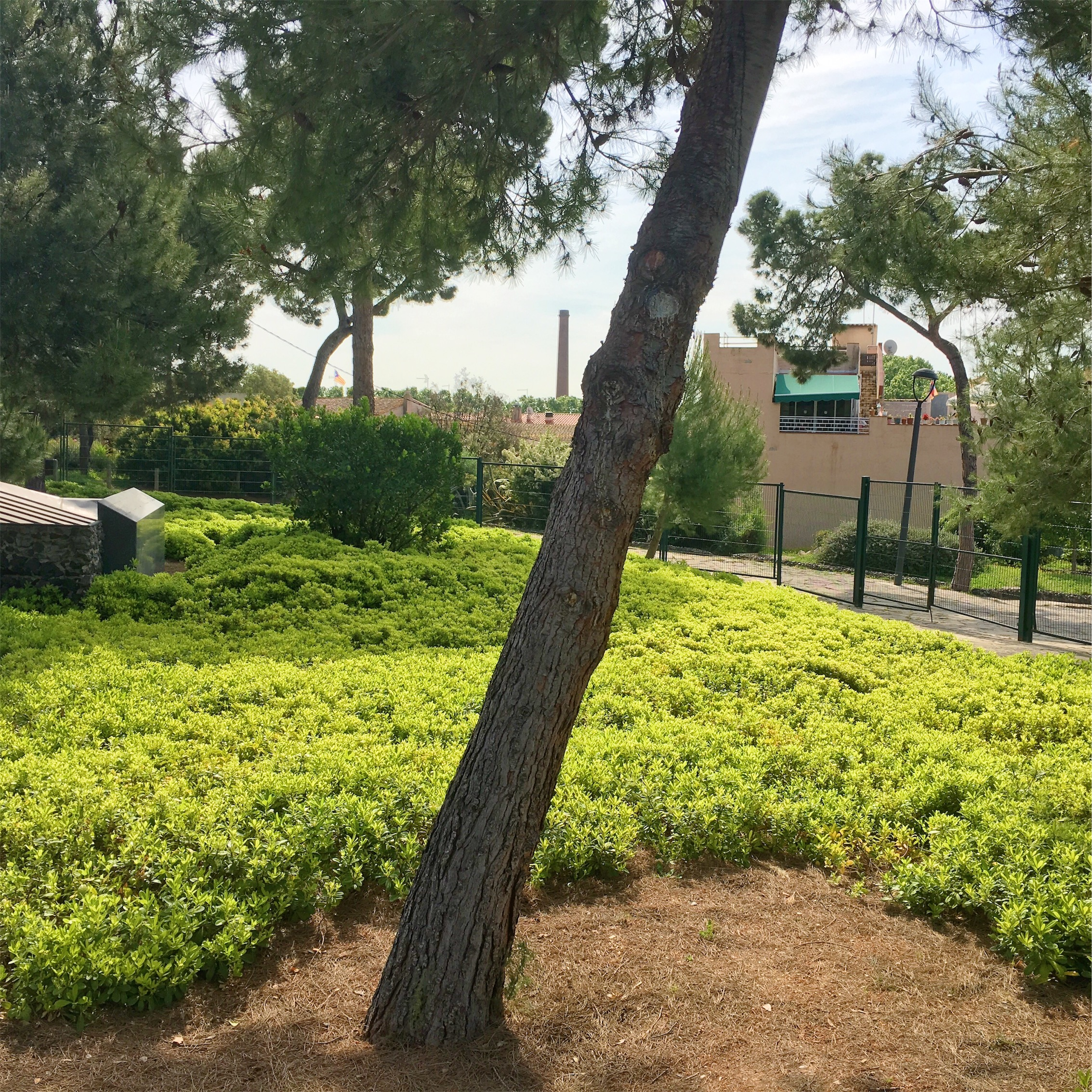
On the exterior, the roughly textured and tilted pillars support the church's structure while imitating the pine trees that grow in the area. It really made the church feel like a natural part of the landscape, as if it also sprung up from the ground. Somehow I felt this was so much less intimidating that the grandiose, glorifying designs of most other churches I've been in. And it also made me feel like this church was somewhere that a newcomer could really plant their roots and find a community.
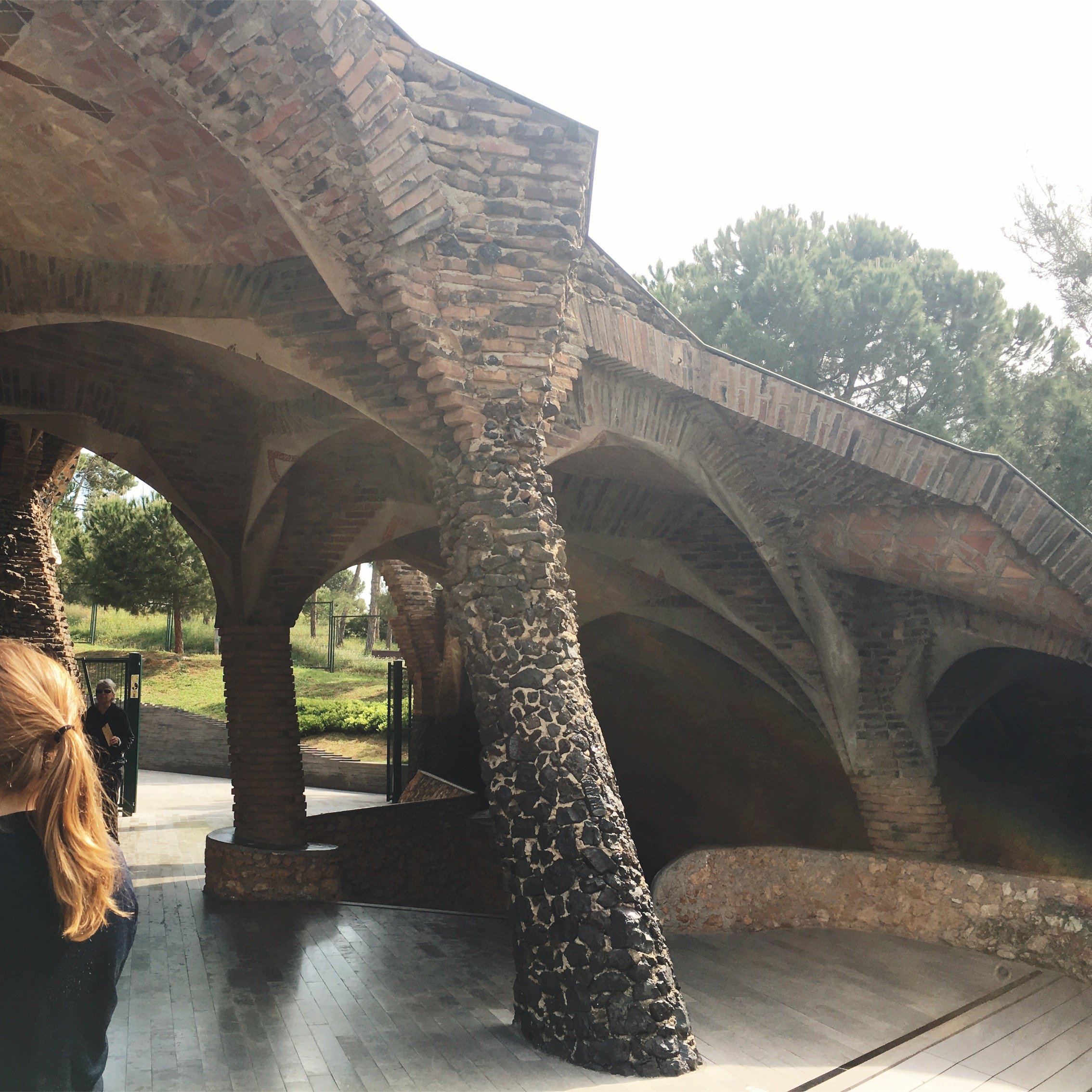
I also really liked that Gaudí used "unwanted" materials in the construction of this church. Burnt bricks, scrap metal, random rocks, and broken glass from the nearby factory all come together to make a beautiful collage of different shapes and styles.
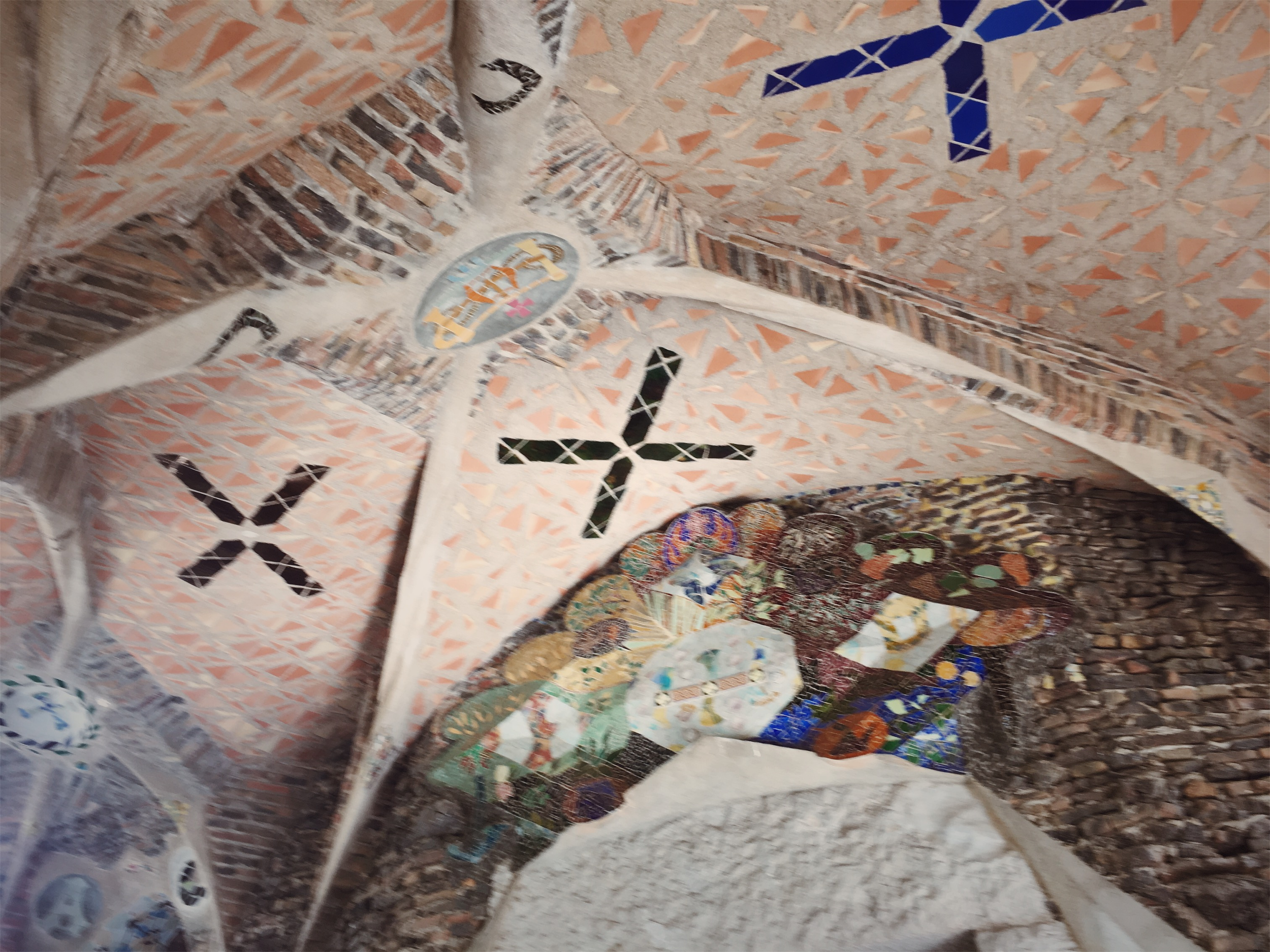
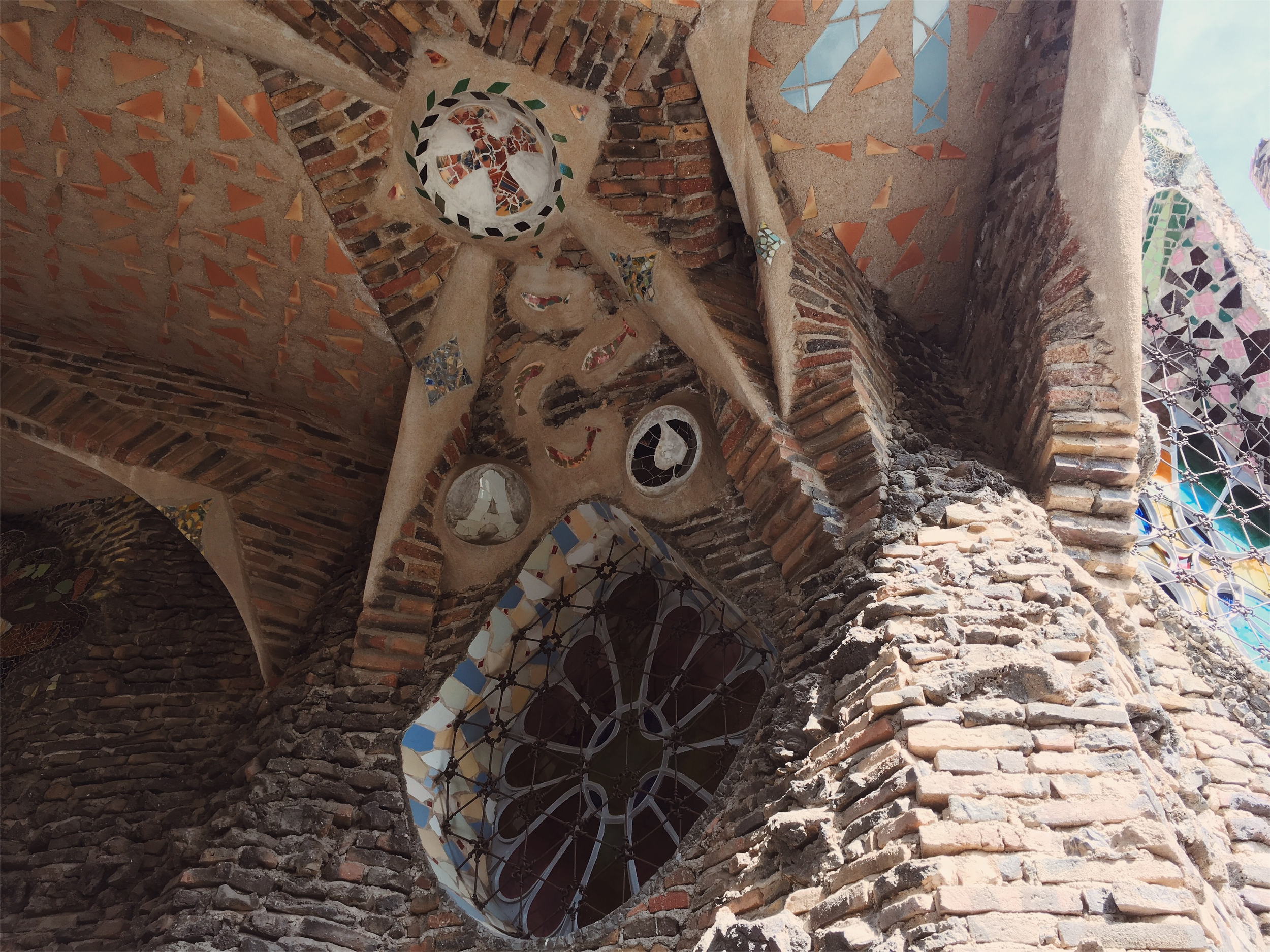
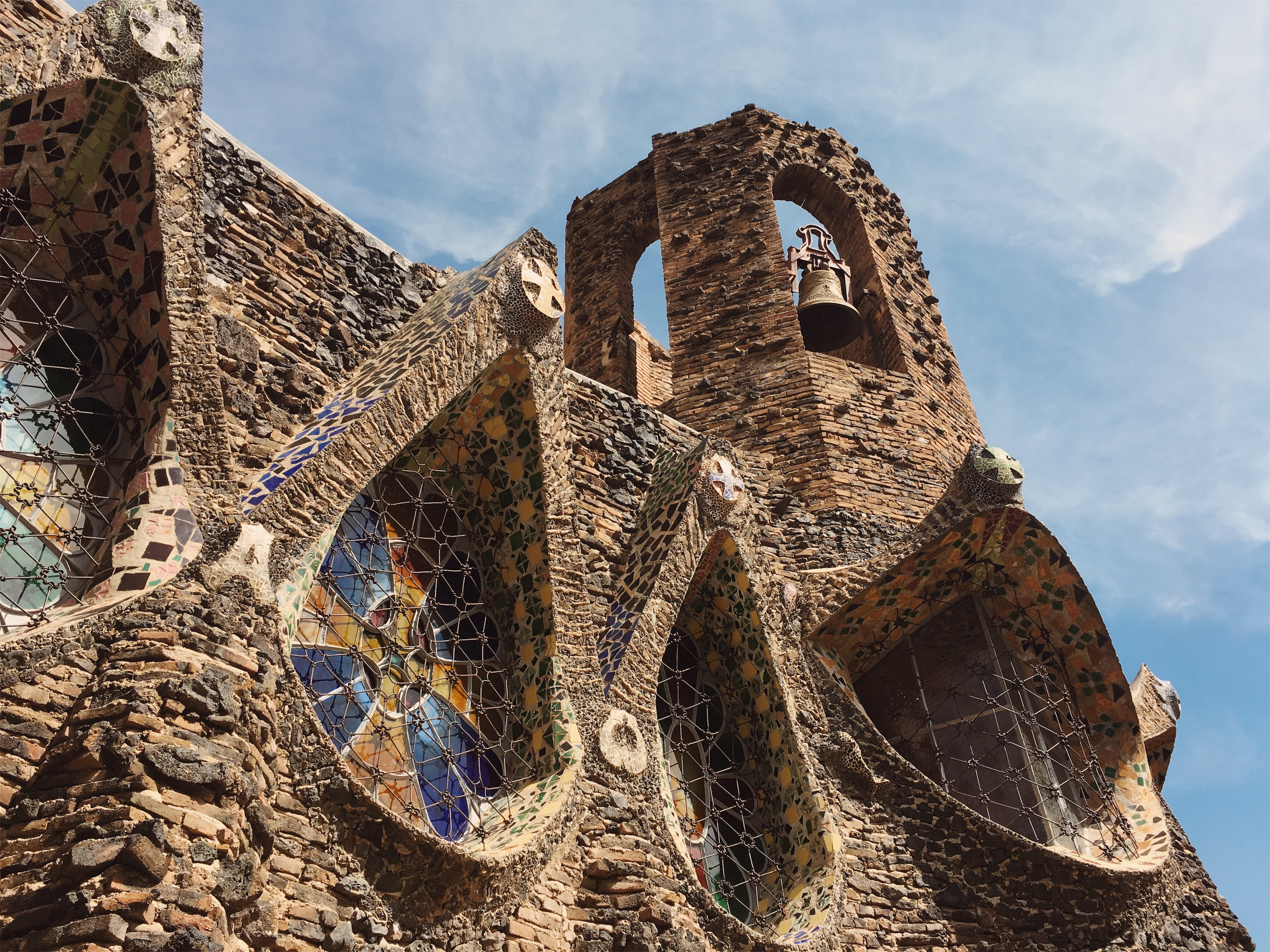
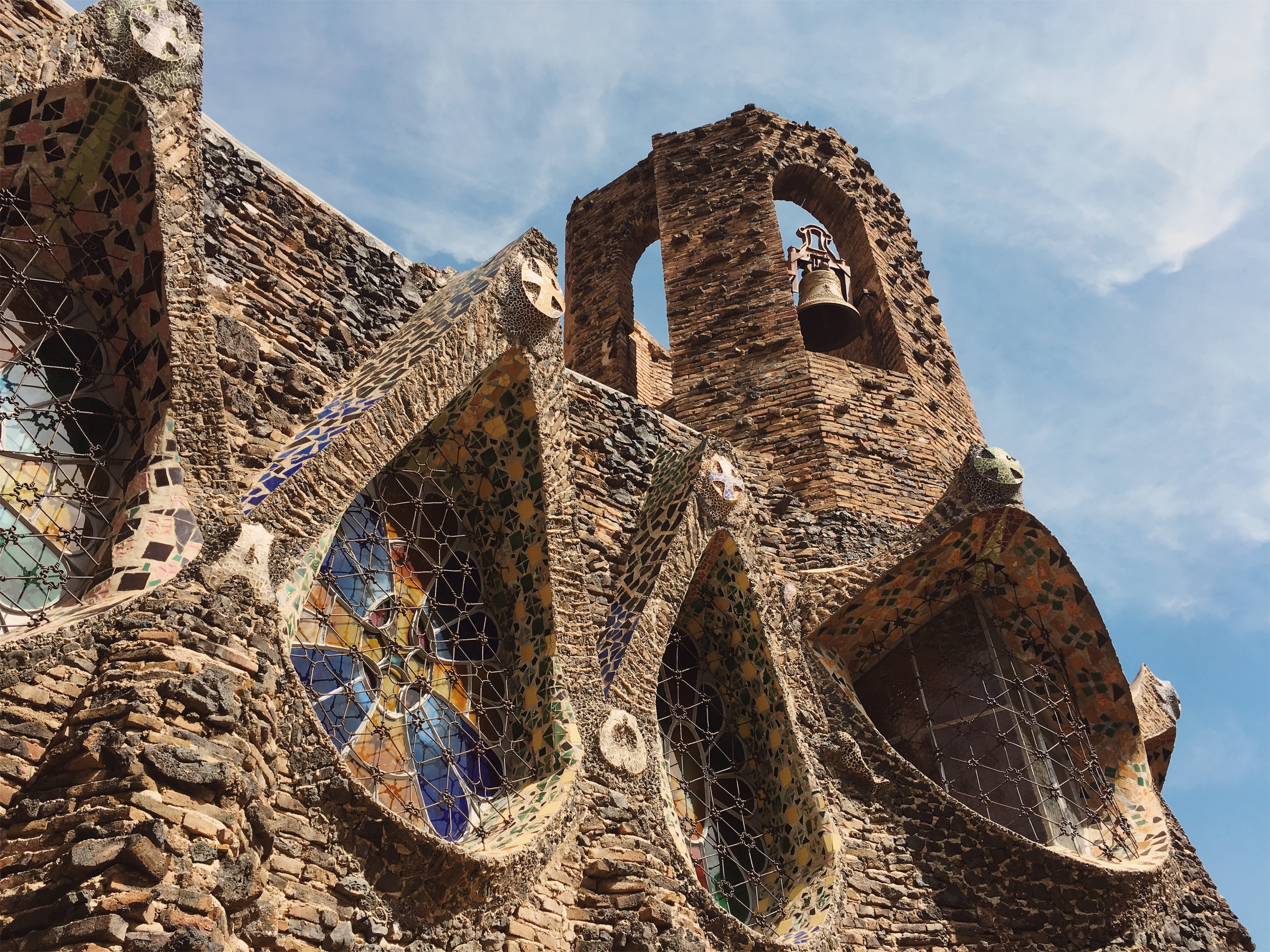
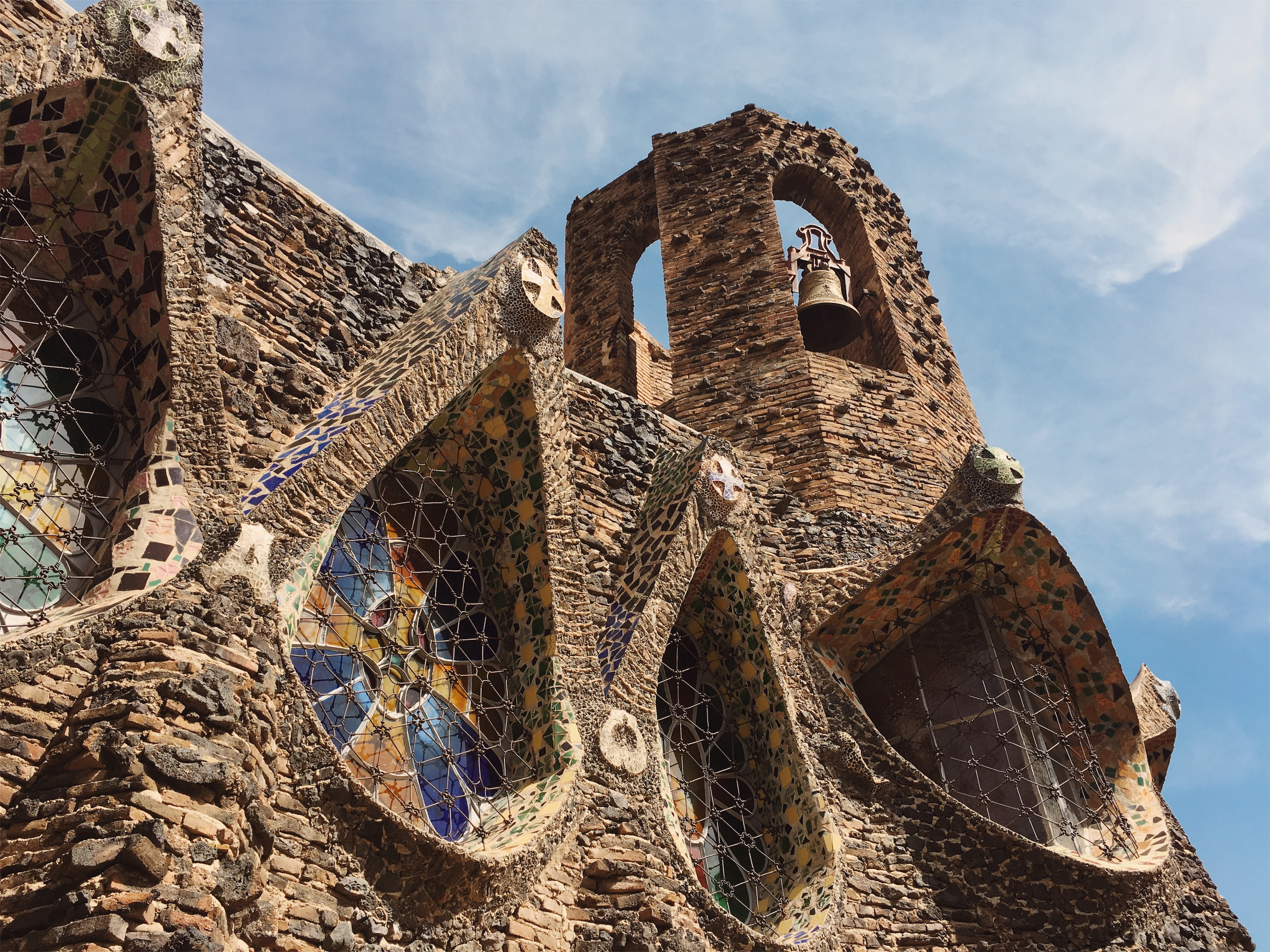
The bars covering the window are made of scrap metal from defective textile machines.
They way Gaudí saw a new purpose in the things that the rest of the town considered to be waste was inspiring. The amalgamation and redemption of these scrap parts speak to the vibe that I seek out in a place of worship— this was designed to be a place to bring together diverse, imperfect people for a greater good.
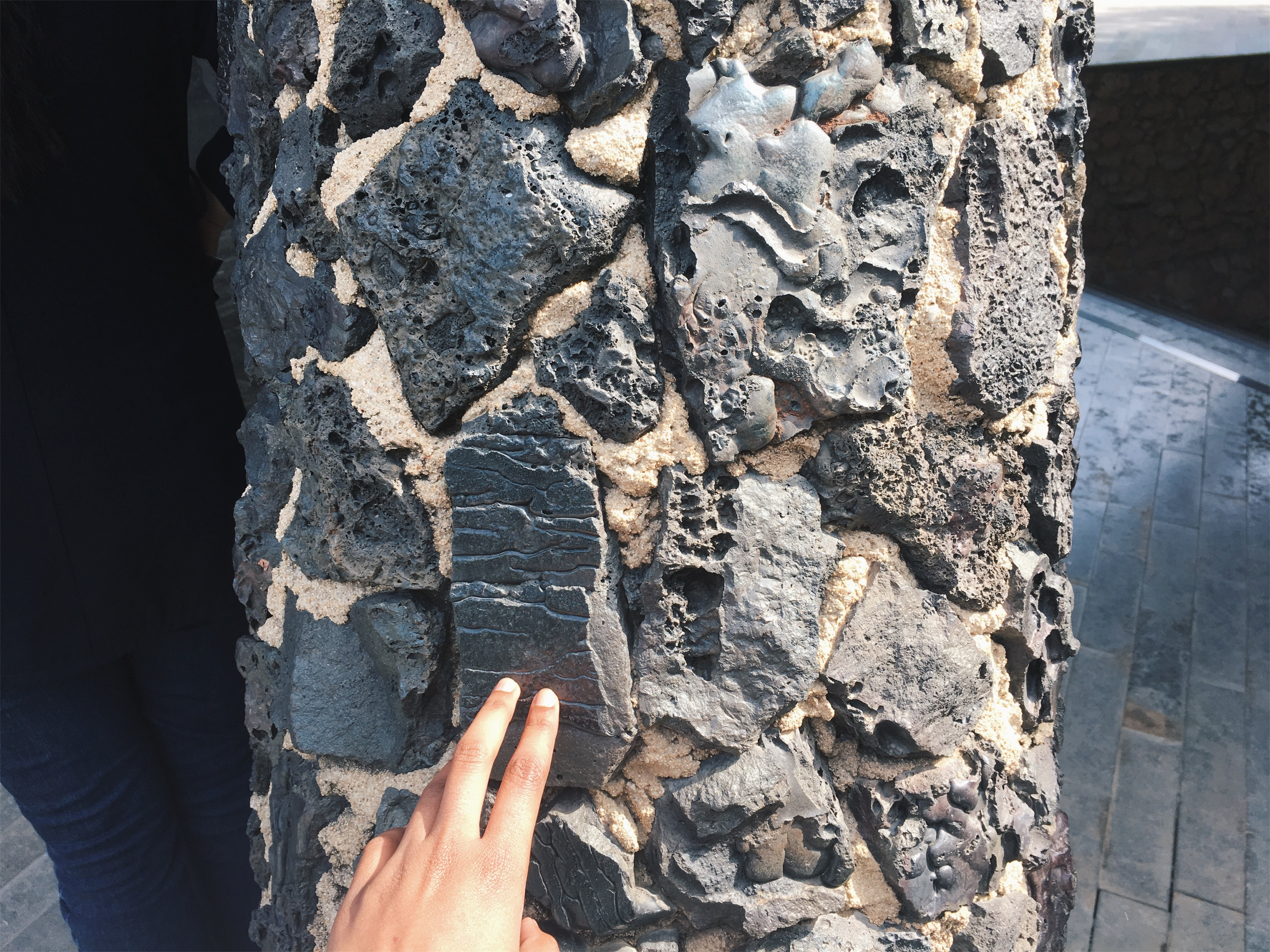
Not only is this church's design true to the purpose of the building, it also seemed to me to be an honest record of Gaudí's own artistic instinct and curiosity. Though Gaudí left it unfinished, this tiny little church full of imperfections was such a comfort to me. As soon as I walked in, the homesickness I had felt for weeks was quietly soothed. And once I was inside, it seemed that I couldn't get enough. Every turn held a new nook with a curious detail to examine, or an unexpected texture that compelled me to reach out and touch. It was sad when our excursion group moved on and I had to leave. I definitely want to plan a trip back with friend or a loved one someday, so I can see this place with a second set of eyes. One look didn't feel like enough.