Rakhi and the Duty to Protect
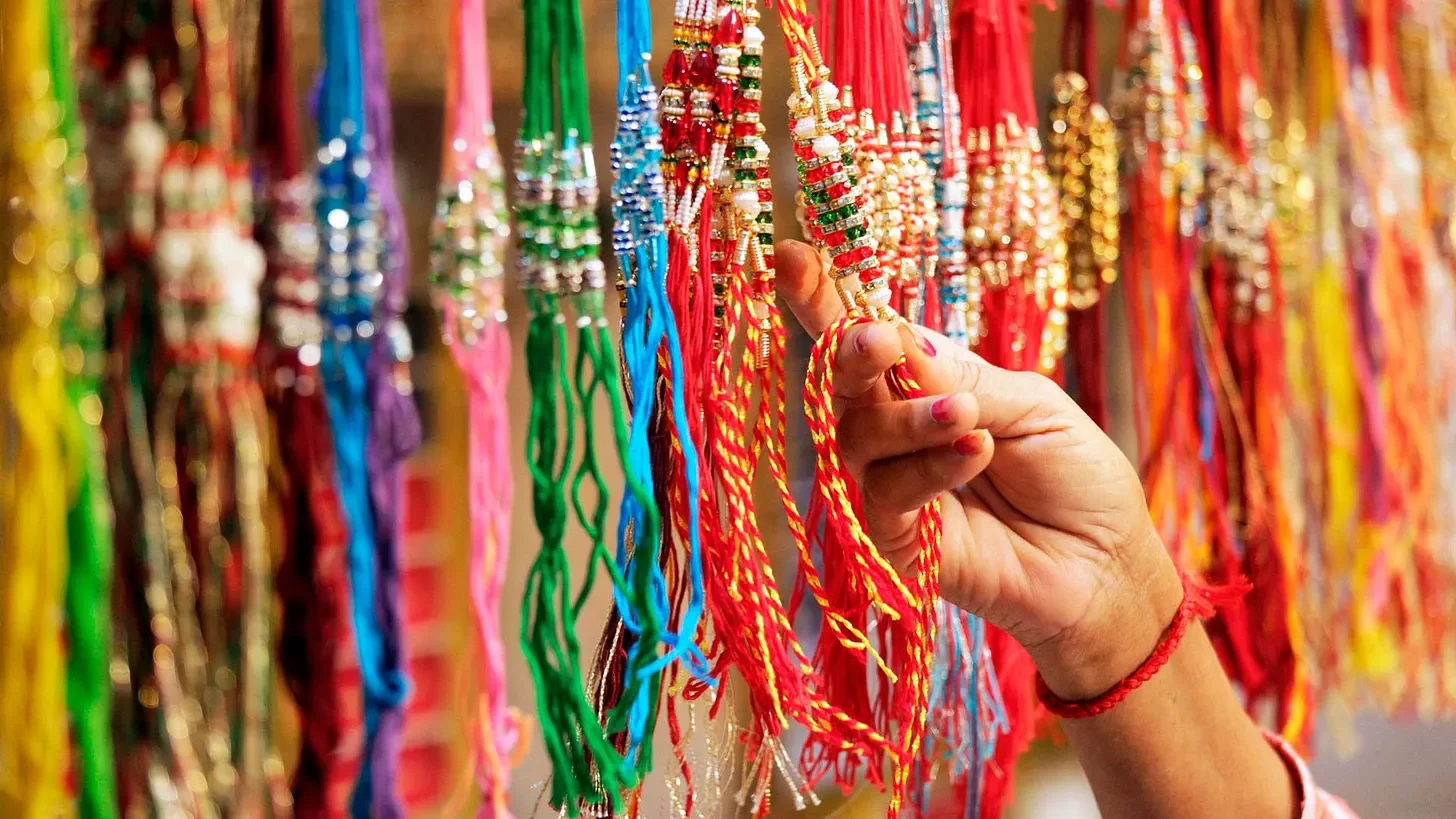
In the last sweltering weeks of summer, when I was about seven years old, I noticed a strange new product at our local Indian grocery store. Sparkly woven bracelets, some embellished with cartoon charms, were heaped in large display buckets right beside the entrance. Each was stretched across a thin strip of cardboard and individually wrapped in glossy plastic. I deduced from the packaging that they were toys. Cheap check-out aisle gimmicks made for kids like me to use and toss after a few days. But these bracelets also reminded me of something more substantial.
Some of my friends from school had recently come back from summer camp. Their arms, freshly tanned with scatterings of sun-bleached duckling fuzz hair, were newly laden with stacks of woven string bracelets. The bracelets varied in thickness and came in different patterns. There were stripes, chevrons, zigzags, and swirls, all made from colorful embroidery floss. I was told they were friendship bracelets.
The ritual of it mystified me. Apparently, the older camp kids passed down their secrets each summer, teaching younger campers to coax neat patterns out of limp threads. The bracelets were made and gifted in settings that were foreign to me: around warm bonfires, in noisy mess halls, on canoes, and in the middle of the night between swishy nylon tents.
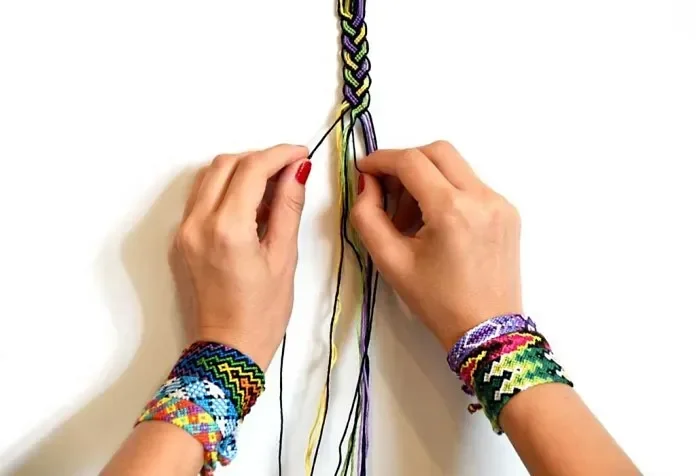
Friendship bracelets symbolized a loyalty too strong to fade during long school years apart, too strong to wriggle out of, even when one took a shower or went swimming. Though the strings frayed and lost their color, the bracelets were worn year-round. The most beloved kids had at least a couple encircling their wrists at all times.
The tradition of personally gifting something custom-made is what makes friendship bracelets special, of course. But that was lost on me. When I saw the shiny packets of thread in the Indian store, I thought I had found a cheat code to popularity. Being a shortcut-loving brat, I naturally made a scene and demanded that my mom buy me one.
She hesitated at first, muttering “I think those are only for boys.” Undeterred, I fished one from the pile which had vivid shades of pink and yellow woven through. I shoved it towards her, pointing at the ‘girly’ colors. She stared at me with a slightly pained squint. Something too complicated to explain in the middle of a grocery store bubbled up behind her lips. But without further argument, she plopped the bracelet I was holding in our shopping cart, tossing in a second for my younger brother.
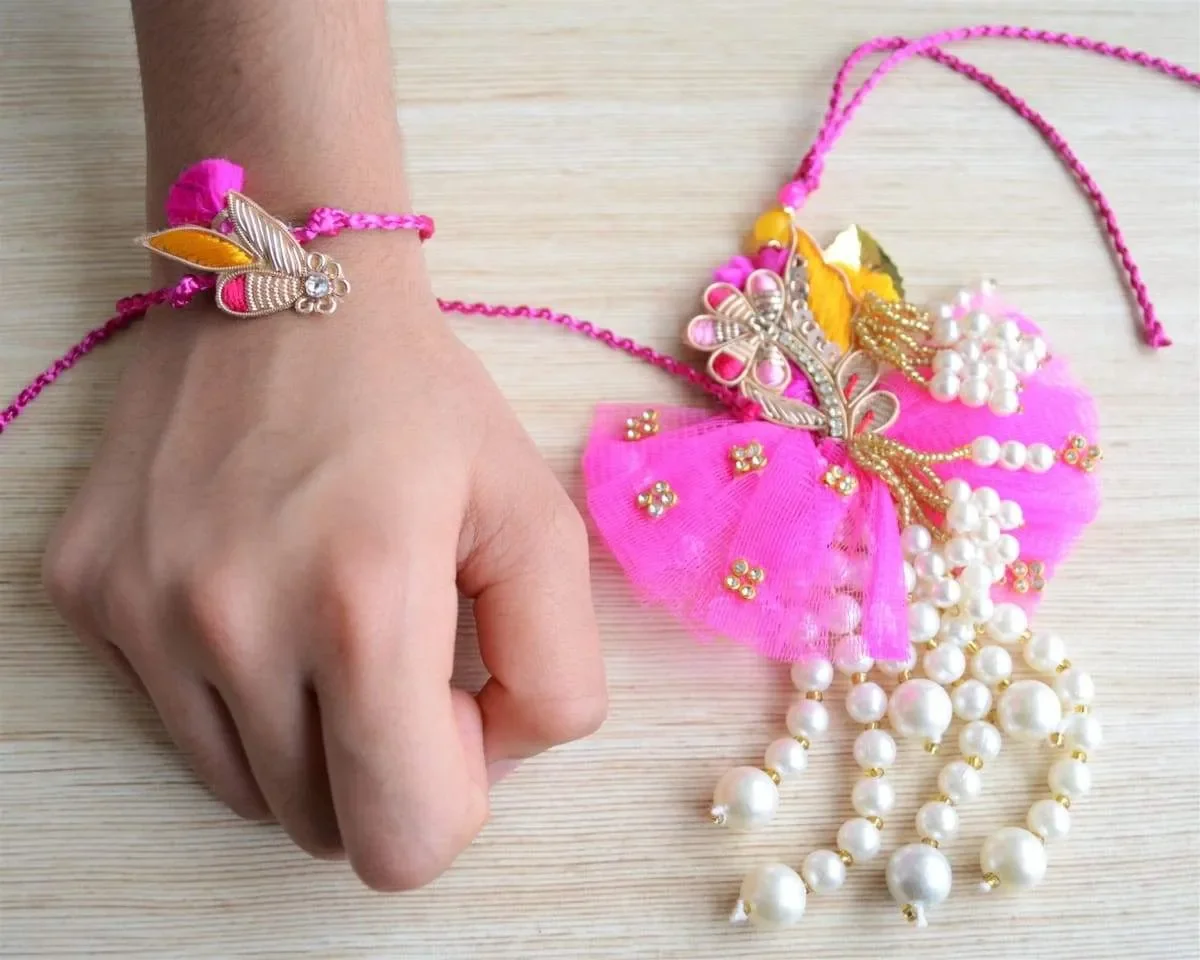
As it turns out, the bracelets in the Indian store were not friendship bracelets. Nor were they gimmicky toys. They were rakhis.
A rakhi is an ornamental wristband traditionally tied by sisters on the wrists of their brothers during the Hindu festival known as Raksha Bandhan (Sanskrit for “protection bond”). This ritual represents a sister entrusting her brother to protect her throughout life. Traditionally, brotherly protection included arranging for a sister’s marriage in the case of their father’s death, acting as a liason between the sibling’s own family and the in-laws of the sister during marital disputes, and in some extreme circumstances, enacting violence upon those who hurt or dishonored the sister.
Many have rejected the rakhi ritual as misogynistic, claiming that it places men of all ages and competencies ahead of their sisters and that it unfairly assumes men to be more fit to lead a family. Others believe the ritual does not necessarily further unequal gender dynamics. After all, brothers are also expected to give gifts to their sisters during Raksha Bandhan. Some families have attempted to queer the holiday, or at least to mitigate gender roles, by encouraging sisters and brothers alike to wear and tie rakhis and to exchange gifts.
Because friendship bracelets were my gateway to rakhis, and because my South Indian family doesn’t observe Raksha Bandhan with much seriousness anyway, I tend to view the rakhi ritual as cute and harmless.
In modern contexts, I don’t think it is disempowering for a woman to express trust in her brother’s loyalty and protection. And I certainly don’t think there’s any reason the sentiment can’t flow both ways. Sure, the gender roles are antiquated, but so is the expectation for men to buy women flowers on Valentine’s day.
I actually wish a gender-neutral rakhi ceremony was more widely practiced. The loyalty and friendship among siblings, cousins, and friends-who-might-as-well-be-siblings is one of my favorite forms of love. It deserves more celebration. But, more importantly, Raksha Bandhan is a good opportunity to reflect on what it means to protect one another.
One of the first concepts I learned in law school is that there is no general duty to protect. In narrow circumstances, such as when one works as a doctor or as some kind of mandatory reporter, a professional duty to protect is created. However, in general, American law does not require people to protect or rescue one another.
Nonetheless, this country has accomplished good things by leaning into its role as a protector of the people. That is, until you look closely.
Child protective services removes children from dangerous environments (but also mercilessly separates poor families). The national guard mobilizes to protect civilians during natural disasters (but also mobilizes to suppress political protest). The legal “protections” of the justice system prevent discrimination and provide recourse when one is injured (but also strictly limit what “fundamental rights” one is entitled to).
The “protection” ensured by our imperialist, capitalist government requires violence and power to uphold. By contrast, the protection celebrated during Raksha Bandhan is the type we get from living, breathing people. The rakhi ritual is a recognition that the protection you give to your siblings (your neighbors, your comrades, your peers) is so vital that it is basically sacred. To borrow western theory, Raksha Bandhan is about mutual aid.
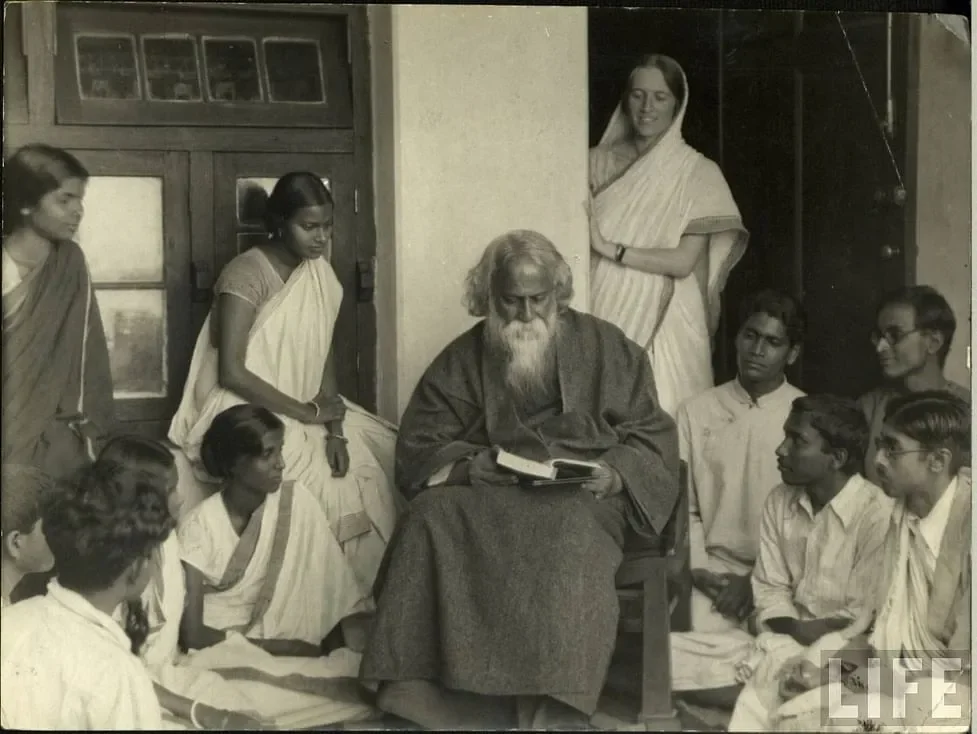
Famed Bengali poet, Rabindranath Tagore, also viewed Raksha Bandhan in this way. In 1905, he encouraged Hindus and Muslims to tie rakhis on one another to protest the British partition of Bengal. Many took to the streets and performed the rakhi ritual as a secular political gesture. After years of interfaith resistance by the Bengali people, the government withdrew the proposition to divide Bengal in 1911.
Despite this brief victory, the British violently severed Bengal in 1947, splitting the culturally unified region into the separate states of West Bengal and East Bengal, belonging to India and Pakistan respectively. East Bengal later became the independent nation of Bangladesh.
The British used protection as a pretext for partition. Communities were divided as a means to “protect” South Asians from interreligious violence. This happened despite the fact that ethnic unity was a more salient issue to most South Asians than religious differences. The misguided political strategy of the British resulted in many years of war and turmoil from which South Asia has not fully recovered.
History has shown repeatedly that interpersonal protection is more sustainable, meaningful, and effective at meeting needs than government protection. But protection is distinct from mere signaling of solidarity.
In the same way a store-bought bracelet was not going to grant me the camaraderie, intimacy, and affection which was imbued in the summer camp kids’ hand-made friendship bracelets, signaling support is not enough to keep our siblings and neighbors safe from material harm.
The difference between protection and signaling solidarity is important to think about in an age of social media posturing and parasocial relationships. The girlboss on Instagram who calls you “sis” will not fight for you like your real sisters will.
My one critique of the rakhi ritual is that we should not be lulled into conflating the wristband with the protection it represents. This Raksha Bandhan, I hope that those who celebrate will reflect on the real, tangible ways that our siblings and our comrades have saved us, and that we will stay consistent with those acts of care until next summer.